
Hotel and restaurant tablecloths: the right choices for a perfect product.
- Orio Team

- 29 ott
- Tempo di lettura: 4 min

Hotels and restaurants must make fundamental choices when organizing their dining rooms. One of the most complicated decisions concerns table linens and everything related to them. But what are these steps?
The types to choose from
Runner
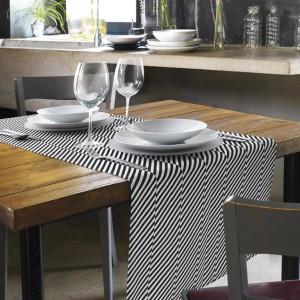
A table runner is an accessory that adds a touch of style to your table and dining room. This is because it enhances the decor with its elegance, highlighting the tableware.
The runner is nothing more than a band of variable fabric (some are cotton, others linen or silk) and smaller in size than the board.
It can be used alone, adding a touch of simplicity and minimalism to the table, or combined with matching tablecloths and centerpieces for a more refined and refined look.




Disposable tablecloths
Disposable tablecloths are a very popular choice for both hotel chains and restaurants.
The advantages of this choice are easy to understand: with a high level of quality, you can save on table linen management and cleaning costs .
In recent years, the choice of multipurpose tablecloths has expanded, both in terms of colors and materials used.
In fact, the available fabrics are different, from cellulose to fully compostable cellulose, from soft Spunlace fabric to non-woven Polypropylene fabric, up to fabric made from recycled plastic.


Stain-resistant tablecloths
One of the other possible choices is to opt for tablecloths with stain-resistant characteristics.
This choice is generally dictated by the desire to be faster, more practical and efficient and stain-resistant tablecloths undoubtedly go in this direction.
Stain-resistant tablecloths are generally made of 100% polyester, a fabric that is constantly processed during production to achieve a softness similar to that of cotton .
The stain-resistant tablecloth can be cleaned very quickly even with just a damp sponge and dries very quickly thanks to its molecular structure.
Another strong point is that the material does not need to be ironed as it does not produce wrinkles and creases when used.


Placemats
Placemats are a particular type of placemat that are popular in both private kitchens and in restaurants and hotels.
They are generally used for breakfast table linen and are made from very different materials.
Placemats can be found on the market in fabric, mat, raffia, plastic, or even bamboo or wooden strips.
They are usually small in size (53x37 centimetres) and for large catering establishments they are also available in paper or non-woven fabric.


Napkins
Even when it comes to a small but essential accessory on the table, several aspects must be considered.
First, the materials: as with other types of tablecloths, there are various materials to choose from. The only rule to follow in this case is to match the tablecloth's material so as not to disturb the eyes of discerning visitors.
Napkins vary in size depending on their function: for lunches and dinners, they are generally 45x45 centimetres, while for buffets or aperitifs, they are smaller, usually around 20x20 centimetres.


Fabrics to choose from
Even when it comes to fabrics, several aspects must be taken into consideration that can influence the customer's subsequent experience in the venue.
There are many materials to choose from, and they vary dramatically. The starting point for choosing a fabric is to ask yourself, "What do we want our customer to feel?"
If you want to focus on comfort and manageability, the best material is definitely cotton , which provides both a soft-touch product and great manageability and ease of washing.
There are also softer materials like silk , but the washing process is definitely more complex, especially if you are dealing with many items like for a hotel or restaurant.
As regards ecological materials, in recent years products have been developed with materials that take nature and pollution into consideration: among these, the most used is cellulose , used above all in tablecloths and napkins.
There are also products made using recycled plastic that protect the environment and still provide a similar customer experience to that of non-recycled products.
The color combinations
When choosing the colors of the tablecloths, you need to take into consideration details external to the table such as the furnishings and colors of the room.
Furthermore, the choice must also take into account the situation and type of room: for a classy and elegant space, the most recommended colors are soft ones like white, cream, and ivory.

If you want, you can also add some details and personalization to the tablecloths, but always trying not to deviate from the colors of the room.
If the restaurant/hotel has particular colors, the choice of table linens should follow this trend, perhaps reproducing secondary colors and patterns present in the furnishings.
Another aspect to take inspiration from could be the type of food the restaurant offers.
This only applies to restaurants that offer only one type of food: for example, if we're considering a seafood restaurant, we might decide to opt for table linens that reflect the colors of the sea, blending the color from the darkest for the tablecloth to the lightest for the napkins (or vice versa, with a light color for the tablecloth and a dark color for the napkins).